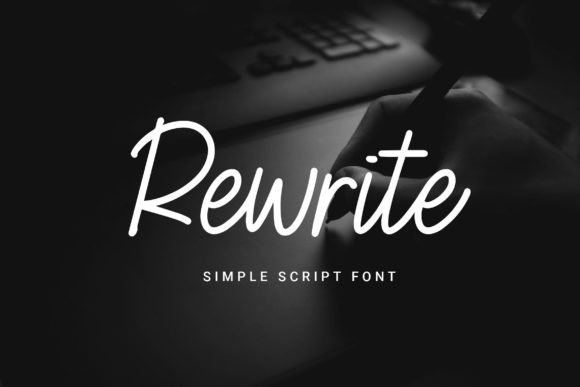
Graceful Script Font for Web Design
As a web designer, I’m always on the lookout for fonts that bring personality and visual interest to digital projects. Rewrite caught my eye with its elegant, flowing strokes and natural charm. After testing it in several real-world layouts, I can confidently say it’s a standout choice for creative websites and brand experiences.
Testing Rewrite in a Hero Section
I started by placing Rewrite in a hero section of a boutique online store. The font’s fluidity and soft curves added a sense of sophistication without overwhelming the design. It worked beautifully as the main headline, drawing attention while maintaining a clean, modern feel. On desktop, it looked polished, and on mobile, it scaled well without losing its character.
The font’s weight and spacing made it ideal for short phrases like “Handmade with Love” or “Discover Our Collection.” It felt just right for a brand that values artistry and authenticity. I paired it with a simple sans serif for the subtext, which created a balanced contrast without clashing.
Using Rewrite for Call-to-Action Buttons
Next, I tried using Rewrite for a call-to-action button on a product landing page. The font’s elegance gave the button a premium feel, making it stand out against a minimalist background. It was especially effective when paired with a subtle gradient or solid color, adding a touch of class without being too flashy.
On smaller screens, the font remained readable, though I noticed that very small buttons could benefit from a slightly bolder weight. For larger buttons, Rewrite added a nice visual punch, making the CTA more inviting and approachable.
Integrating Rewrite in Blog Headers
For a blog redesign project, I used Rewrite as the header font for featured posts. The script style complemented the editorial tone of the site, giving each post a personal, handwritten feel. It worked especially well when placed over image banners or background textures, where its flow added depth and movement.
When paired with a serif font for the body text, the combination felt cohesive and professional. The contrast between the two fonts helped guide the reader’s eye through the content, making the layout more engaging and easier to navigate.
Considerations for Responsive Layouts
One thing to keep in mind is how Rewrite performs in responsive designs. While it looks great on larger screens, it may not be the best choice for tiny mobile text or dense sections of content. I found that using it for headings and short labels was most effective, while avoiding it for long paragraphs or navigation menus.
Accessibility is another consideration. Rewrite’s decorative nature makes it less suitable for form labels, error messages, or other UI elements that require high readability. For those cases, a clean sans serif or serif font would be a better fit.
Pairing Rewrite with Other Fonts
Font pairing is key when working with a script font like Rewrite. I experimented with several combinations, and the most successful ones involved pairing it with a simple, neutral typeface. A clean sans serif like Montserrat or Poppins worked well for body text, creating a modern, balanced look.
For more editorial-style sites, a serif font like Lora or Playfair Display provided a timeless, elegant contrast. In both cases, the pairing enhanced the overall aesthetic without overpowering the design. It’s important to test different combinations to find what works best for your specific project.
Checking Font Availability and Licensing
Before integrating Rewrite into any project, I made sure to check the available styles, weights, and file formats. The font came with multiple options, including regular, bold, and alternate characters, which gave me flexibility in design choices.
It also included support for multilingual characters, which was a big plus for international projects. For commercial use, the licensing terms were clear and straightforward, making it easy to use in client work, online stores, or digital templates.
Overall, Rewrite is a versatile and beautiful script font that brings a unique touch to web design. Whether you’re building a portfolio site, launching an online store, or redesigning a blog, it offers a refined, artistic presence that elevates the visual experience.